Skip to the content
Independent NHB & NHM subsidy guide

Understand horticulture subsidies
before you invest

Plain-language explanations of NHB and NHM schemes, every statement linked to the official document it comes from, so farmers and agri-entrepreneurs can plan with confidence.

  • 134 sourced statements
  • 28 documents watched
  • 60 guides · 26 terms
Start with the NHM guide

Where is your project? NHM is run by the states, so the rules that reach you depend on it.

What has changed

In force since 4 September 2026. NHB is not accepting new applications right now

The National Horticulture Board suspended fresh Grant of Clearance applications under Scheme No. 1 and Scheme No. 2 with effect from 4 September 2026, and its online submission facility is unavailable while that lasts. The circular describes the pause as one month but says the reopening date will be notified separately, so treat it as open-ended and check the Board's own website before planning around it.

NHB public circular of 3 September 2026 What changed, and what it means for a pending application
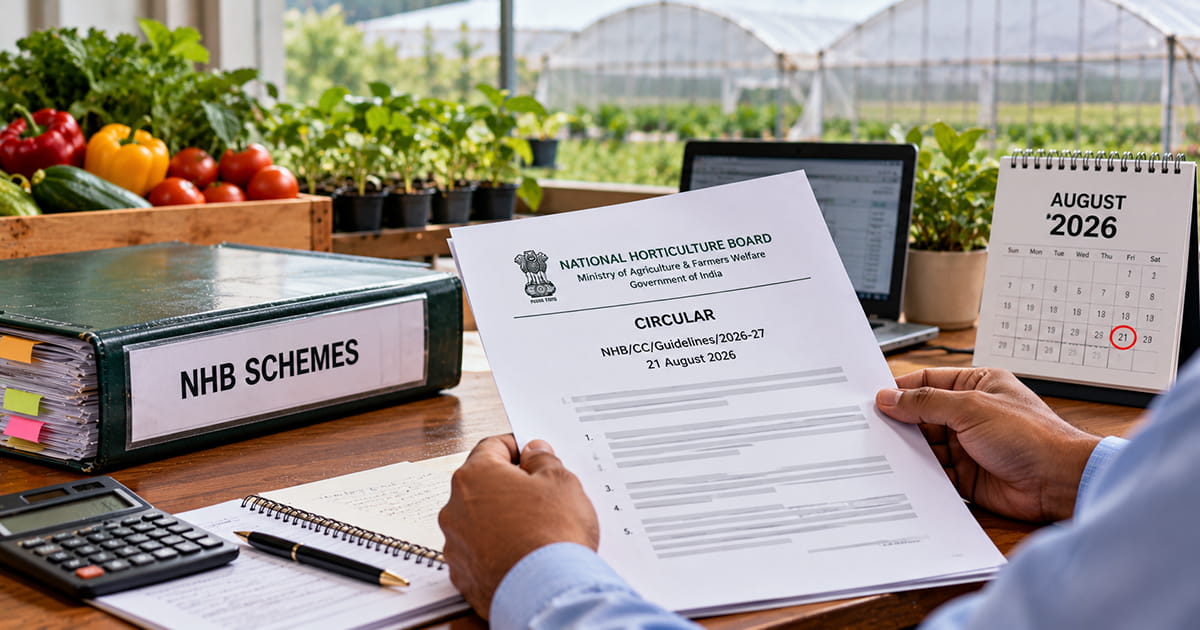

In force since 21 August 2026. NHB assistance changed on 21 August 2026

Assistance is now 35% in general areas and 45% in the North Eastern and Himalayan States, Scheduled Areas and specified Union Territories. Cold storage subsidy is capped at ₹2.00 crore per project, the cost of land is no longer an eligible cost, and only one member of a family may ever claim.

NHB public circular of 21 August 2026 Read the full breakdown

What changed in the NHB schemes in August 2026

From 21 August 2026 National Horticulture Board assistance is 35% in general areas and 45% in the North Eastern and Himalayan States, Scheduled Areas and specified Union Territories. Cold storage subsidy is capped at ₹2.00 crore, land is no longer an eligible cost, and only one member of a family may ever claim. Fresh applications have been paused since 4 September 2026.

NHB
Source verified by our team 07 Sep 2026
Farm machinery under NHM, and why most of it says “as per SMAM norms”

Most machinery under NHM defers to SMAM norms rather than carrying its own figure. The clearest exception is a power tiller up to 8 BHP, costed at ₹1.0 lakh per unit with a maximum of ₹0.40 lakh for general-category farmers.

NHMmechanisation
Source verified by our team 07 Sep 2026
Integrated nutrient and pest management, and organic farming, under NHM

INM and IPM carry a cost norm of ₹5,000 per hectare at 30%, up to 2 hectares per beneficiary. That 30% is the lowest rate in the scheme. Organic farming has no NHM figure at all; the guidelines send you to PKVY norms.

NHMinm-ipm
Source verified by our team 07 Sep 2026
Mushroom production and rejuvenating old orchards under NHM

Rejuvenation of old orchards is supported at 40% in general areas for up to 2 hectares, with removal of dead plants at ₹10,000 per hectare and inputs at ₹40,000 per hectare. Mushroom units are supported separately, with the larger ones credit-linked.

NHMrejuvenation
Source verified by our team 07 Sep 2026
Nurseries and planting material under NHM

A large nursery of 1 to 2 hectares carries a cost norm up to ₹30 lakh per hectare at 40% for the private sector; a small nursery of 0.4 to 1 hectare carries ₹20 lakh per hectare at 50%. Both come with minimum production and accreditation conditions.

NHMplanting-material
Source verified by our team 07 Sep 2026
Water sources and beekeeping under NHM

A community water harvesting structure is supported at a higher rate than an individual farm pond, and a tube-well is considered only when integrated with another component. Beekeeping is supported through colonies, hives and equipment sets, with per-beneficiary limits.

NHMwater-resources
Source verified by our team 07 Sep 2026
NHB cold storage: capacity bands, rates and the 35% pattern

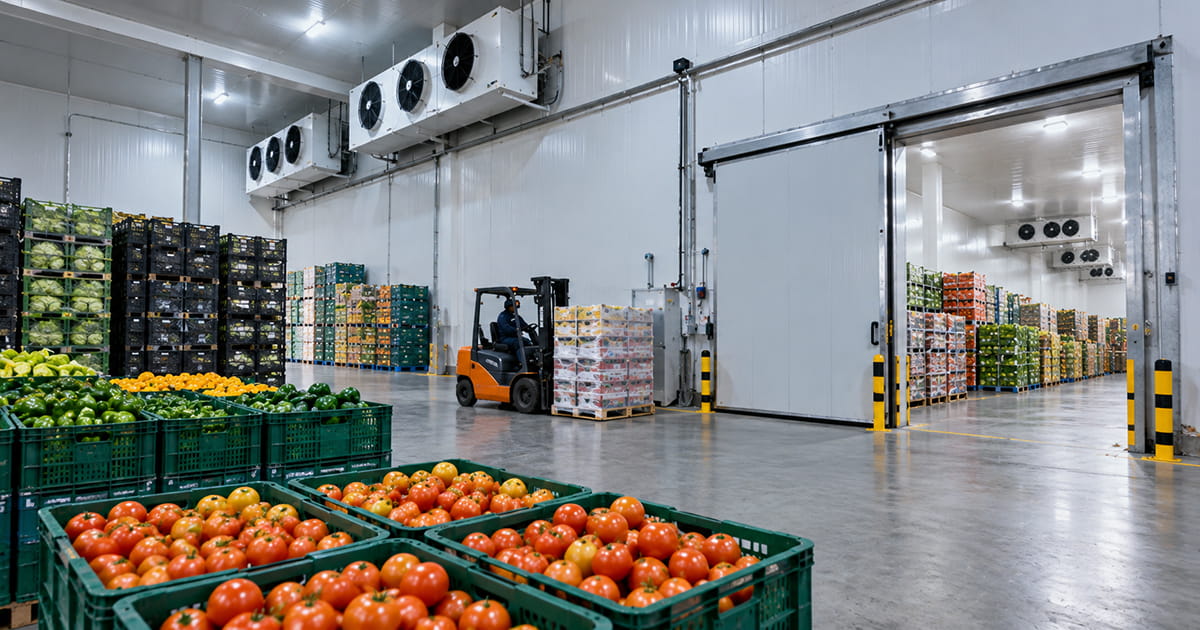
NHB takes cold storage projects above 5,000 MT and up to 20,000 MT. Rates fall as capacity rises, from ₹9,120 per MT in civil construction at the smallest band to ₹4,080 per MT at the largest. Assistance is 35% in general areas, credit-linked back-ended, and NCCD guidelines apply.

NHBnhb-cold-storage
Source verified by our team 07 Sep 2026
NHB commercial horticulture projects: open field and large-scale hi-tech

An open-field commercial horticulture project above 2 hectares is costed at ₹100.00 lakh per project with credit-linked back-ended subsidy at 35% in general areas. A large-scale hi-tech project above 20 hectares in six named crops is costed at ₹200.00 lakh per project at the same 35%.

NHBnhb-commercial-open-field
Source verified by our team 07 Sep 2026
NHB mushroom units and refrigerated transport

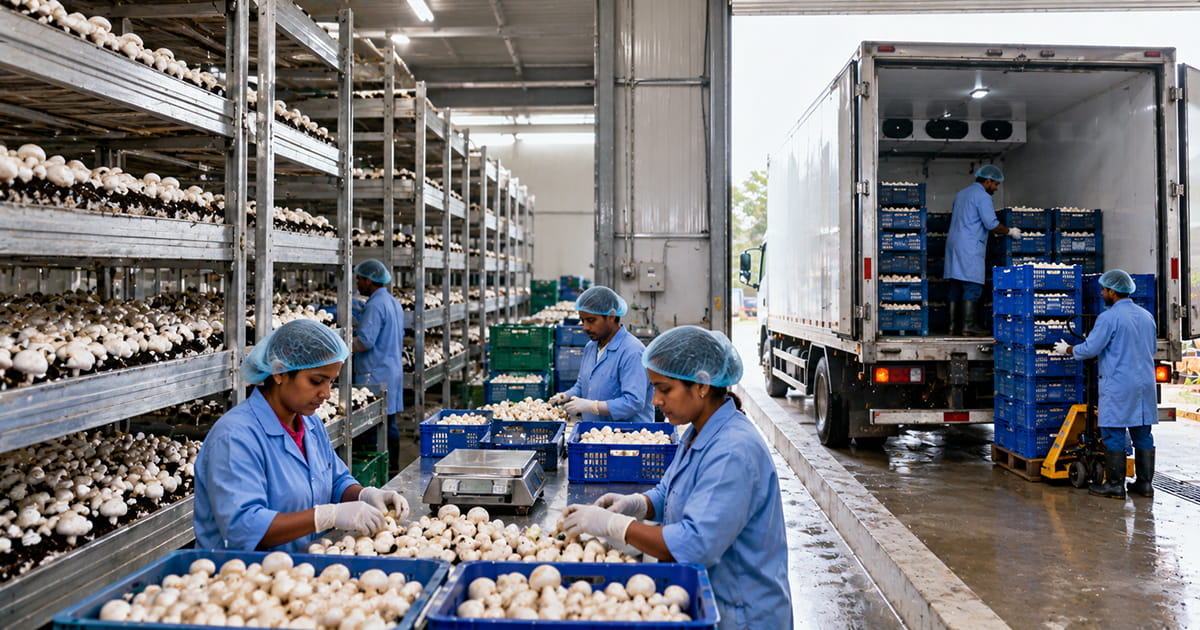
An integrated mushroom unit above 50 MT and up to 300 MT installed capacity carries 35% credit-linked subsidy in general areas. Refrigerated vehicles of 15 MT and above are costed up to ₹80.00 lakh per project with 35% assistance.

NHBnhb-mushroom
Source verified by our team 07 Sep 2026
NHB protected cultivation: per-acre cost norms above 4,000 square metres

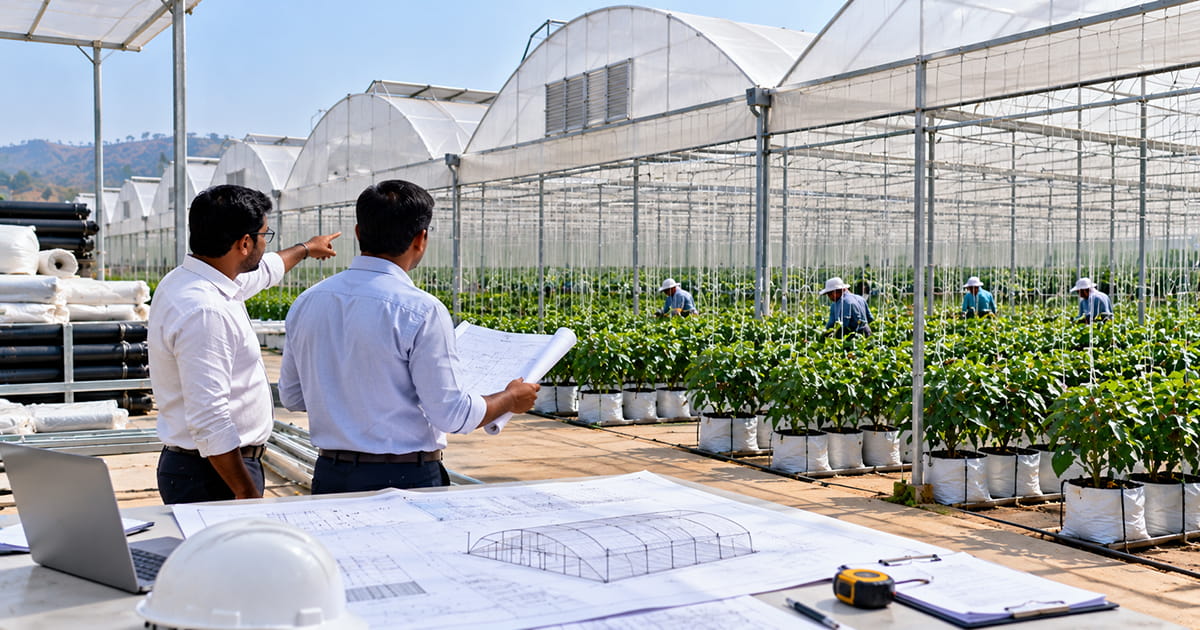
Above 4,000 square metres, protected cultivation becomes an NHB project at 35% of eligible cost with subsidy capped at ₹100 lakh. NHB states its norms per acre: a polyhouse with drip and fogger at ₹40.00 lakh per acre, plus a crop-specific cultivation cost and an overall ceiling.

NHBnhb-protected
Source verified by our team 07 Sep 2026
What NHB supports, and how it differs from NHM

NHB backs larger, bank-financed commercial projects: open-field horticulture above 2 hectares, protected cultivation above 4,000 square metres, and cold storage from 5,001 to 20,000 MT. NHM handles the smaller end. The size of your project usually decides which one applies.

NHB
Source verified by our team 07 Sep 2026
Cold storage and post-harvest under NHM: why the rate is 35% and where 5,000 MT comes from

Most large post-harvest and cold-chain projects are assisted at 35% in general areas as credit-linked back-ended assistance. Cold storage up to 5,000 MT is promoted under NHM; larger capacity moves to the NHB sub-scheme, and subsidy under NHM stops at 5,000 MT.

NHMcold-storage
Source verified by our team 07 Sep 2026
Does NHM give 50% subsidy?

No single rate applies. Protected cultivation is generally 50%, most field crops 40%, INM and IPM 30%, and most large post-harvest projects 35%. The rate is set component by component, and always with a ceiling attached.

NHMprotected-cultivation
Source verified by our team 07 Sep 2026
Growing crops inside a polyhouse: the cost norm you probably missed

Planting material and cultivation inside a protected structure is a separate component from the structure. High-value vegetables carry ₹150 per square metre, orchid and anthurium ₹700, carnation and gerbera ₹600, and rose, chrysanthemum and lilium ₹450, all at 50%.

NHMprotected-crops
Source verified by our team 07 Sep 2026
MIDH, NHM and SHM: what the three names actually mean

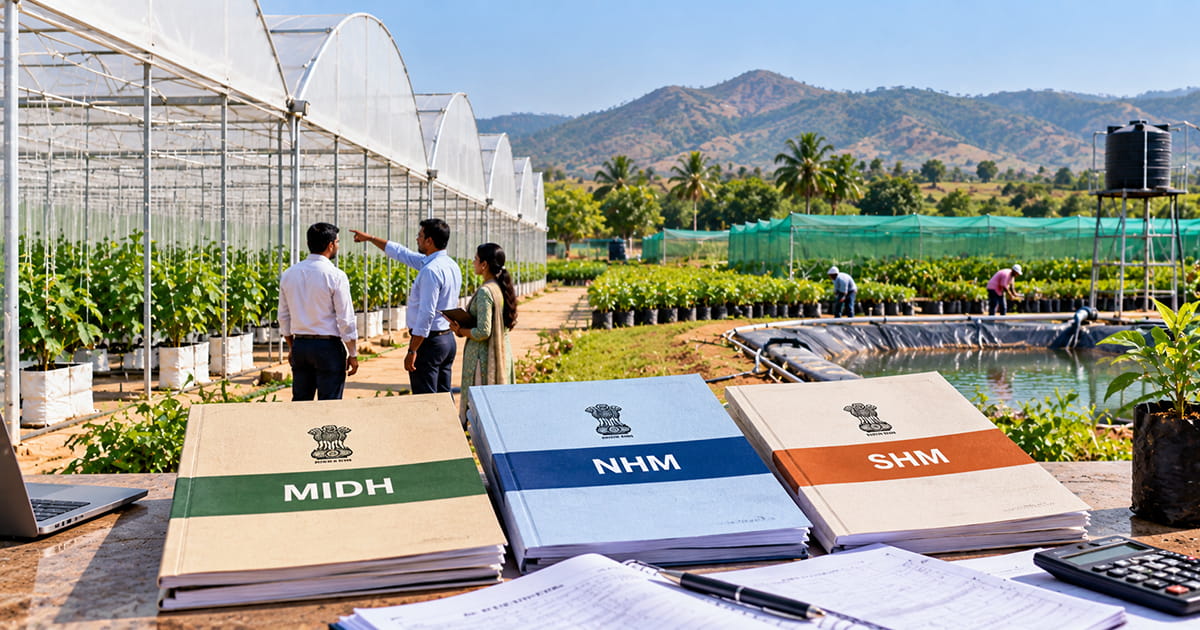
MIDH is the umbrella horticulture mission. NHM is the sub-scheme of MIDH that covers most States and Union Territories. SHM is the State-level machinery that implements it. They are not three competing schemes.

NHM
Source verified by our team 07 Sep 2026
New orchards and area expansion under NHM: cost norms, 40% and the two-hectare limit

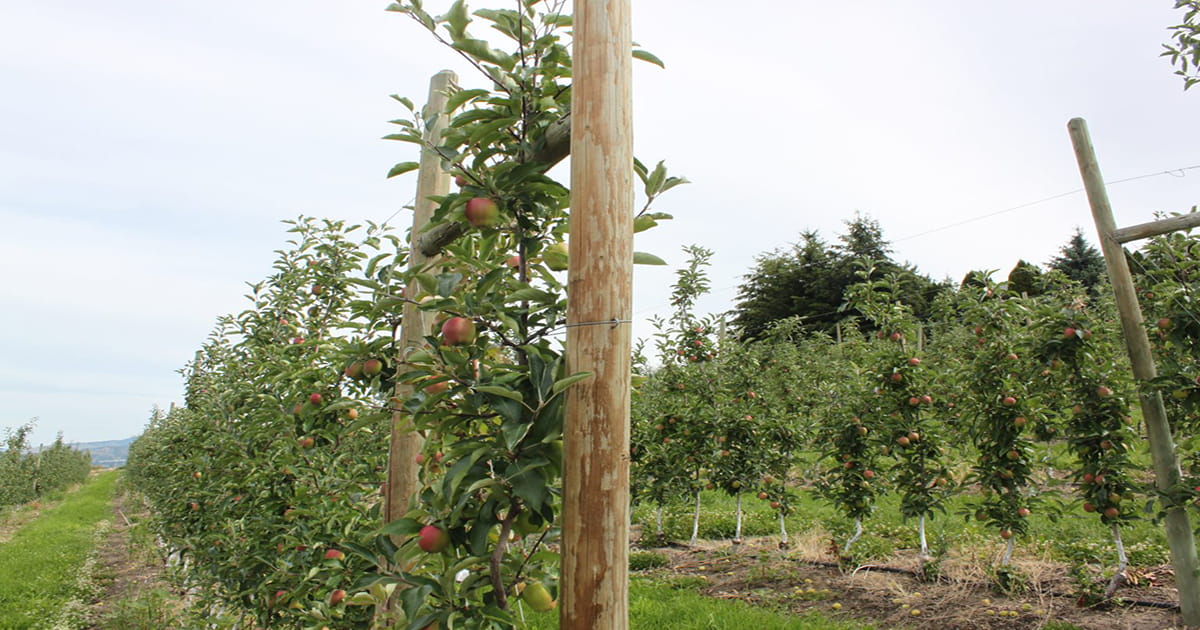
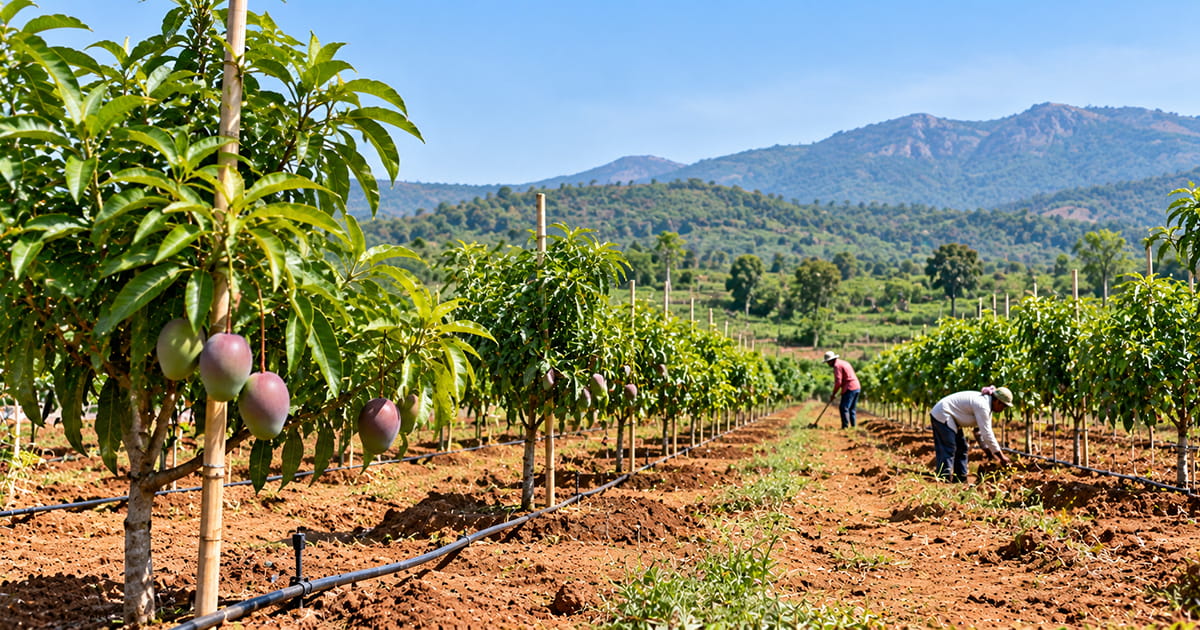
Most fruit area-expansion components are assisted at 40% in general areas, up to 2 hectares per beneficiary, against crop-specific cost norms. For several perennial crops the money comes in two instalments of 60:40, with the second subject to 80% plant survival.

NHMarea-expansion
Source verified by our team 07 Sep 2026
Polyhouse add-ons under NHM: hydroponics, fans, fertigation, mulching and fencing

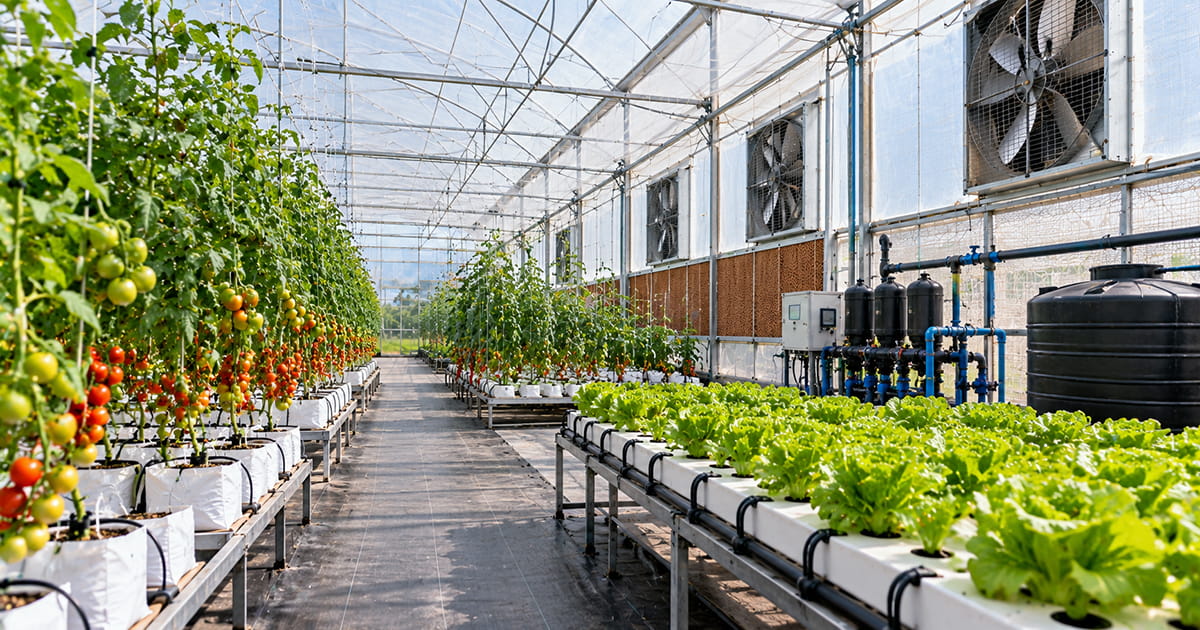
Add-ons are separate components with their own norms and their own ceilings: hydroponics at ₹350 per square metre, circulation fans at ₹5,000 per fan for up to 6 fans, mulching at ₹40,000 per hectare, and fencing at ₹300 per running metre up to 1,000 metres.

NHMprotected-addons
Source verified by our team 07 Sep 2026
Polyhouse subsidy under NHM: fan and pad, naturally ventilated, and the 4,000 square metre ceiling

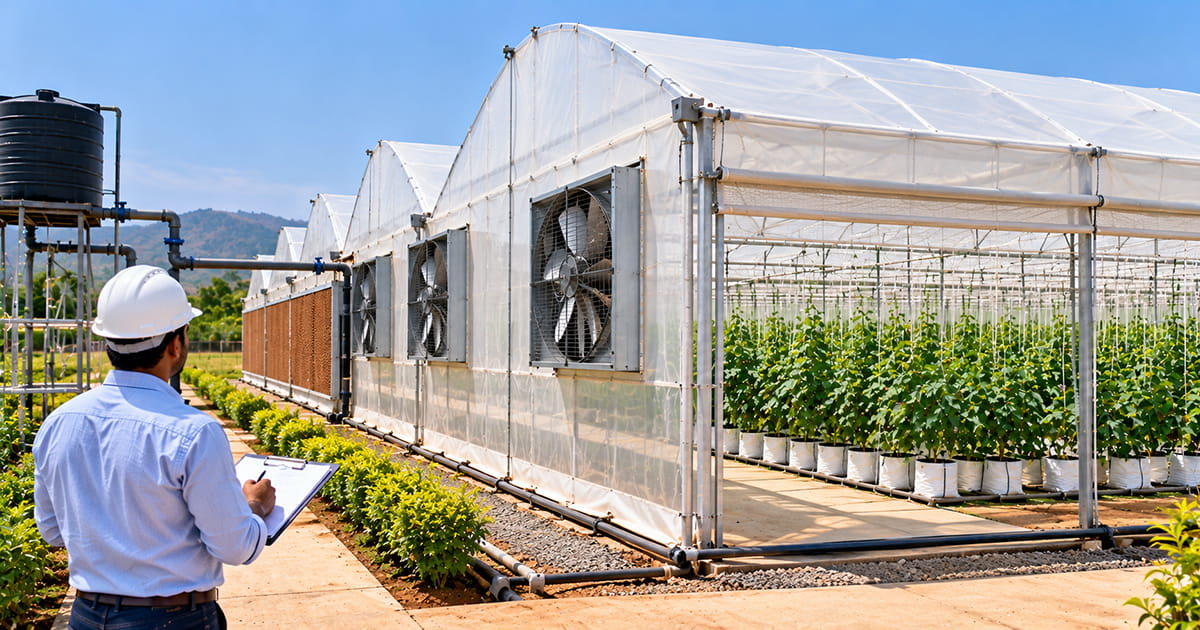
There is no single polyhouse subsidy. Fan and pad and naturally ventilated structures carry different cost norms, both fall as the area grows, both are assisted at 50%, and both are capped at 4,000 square metres per beneficiary.

NHMprotected-cultivation
Source verified by our team 07 Sep 2026
Shade net houses, tunnels and protective nets under NHM

A tubular shade net house carries a cost norm of ₹710 per square metre and a bamboo one ₹450, both assisted at 50% up to 4,000 square metres. Tunnels and anti-bird or anti-hail nets are separate components with their own, much lower, norms.

NHMshade-net-house
Source verified by our team 07 Sep 2026
Vegetables, flowers and spices under NHM: what the cost norms are

Hybrid vegetables carry ₹60,000 per hectare and open-pollinated ones ₹50,000. Cut flowers carry ₹1.25 lakh, bulbous flowers ₹2.50 lakh and loose flowers ₹50,000. All are assisted at 40% in general areas up to 2 hectares.

NHMarea-expansion
Source verified by our team 07 Sep 2026
What a “cost norm” means, and why it is not the price of your project

A cost norm is the upper limit of cost the guidelines recognise when calculating your subsidy. It is not the market price, and a quotation above the norm does not increase your assistance.

NHM
Source verified by our team 07 Sep 2026
NHB's Technology Development and Transfer scheme

The scheme pays for mother-plant nurseries, imported technologies, demonstration machines, horti-fairs, study tours and seminars — at 100%, but only through government agencies, public-sector bodies or the Board itself. A grower reaches it in two places: an exposure visit outside the state, and a merit-based door for growers' associations, cooperatives and FPOs on the machinery component. The ₹100 lakh per hectare is not a subsidy you can apply for.

NHB
Awaiting verification 20 Sep 2026
Polyhouse and net house cost in India, and what you really pay after subsidy

Everyone quotes 50%. Worked at the 4,000 square metre limit against the April 2025 cost norms, the same rule returns about 50% on a net house, 35% on a naturally ventilated polyhouse and 16% on a fan and pad greenhouse — because subsidy is calculated on the cost norm, not on your bill.

NHMprotected-cultivation
Awaiting verification 09 Sep 2026
Horticulture subsidy in Delhi: the word means three different things here

Delhi's agriculture department address does not resolve for us and its main portal carries no horticulture scheme page a fetch can find. Several bodies hold pieces of horticulture here — the development department for the rural villages, the municipal corporation and the DDA for parks and plantations — and they answer different questions.

NHM
Awaiting verification 09 Sep 2026
Horticulture subsidy in the Andaman and Nicobar Islands: no door yet

We have not found an address for the islands' agriculture administration that answers, so this is one of two places on the site with no department linked. Two things are still solid: the Board's circular names these islands for the higher 45% rate, and coconut here routes to a different board entirely.

NHM
Awaiting verification 09 Sep 2026
Independent platform · Every statement carries its source · Not a government website Source review and reader feedback are kept separate.