
Before you spend money: cost norms, rates and conditions can be changed by the Government. This page explains the April 2025 MIDH operational guidelines as written. Confirm the current position with your State Horticulture Department before committing to a project.
Not every project starts with bare land. The mission supports improving what is already there.
Rejuvenating a senile orchard
| Activity | Cost norm | Assistance |
|---|---|---|
| Removal of dead, dying or old plants | ₹10,000 per hectare | 40% in general areas, up to 2 ha |
| Nutrient management, pest management and irrigation inputs | ₹40,000 per hectare | 40% in general areas, up to 2 ha |
The larger figure sits with the inputs, not the clearing. Rejuvenation is treated as bringing trees back into production rather than as a demolition exercise.
When rejuvenation beats replanting
A new orchard on the same land carries a much larger cost norm but also a much longer wait before it yields, and for perennial crops the second instalment depends on 80% plant survival. Rejuvenation costs less and produces sooner. Which is better depends on the age and health of the existing trees, not on which subsidy is bigger.
Mushroom production
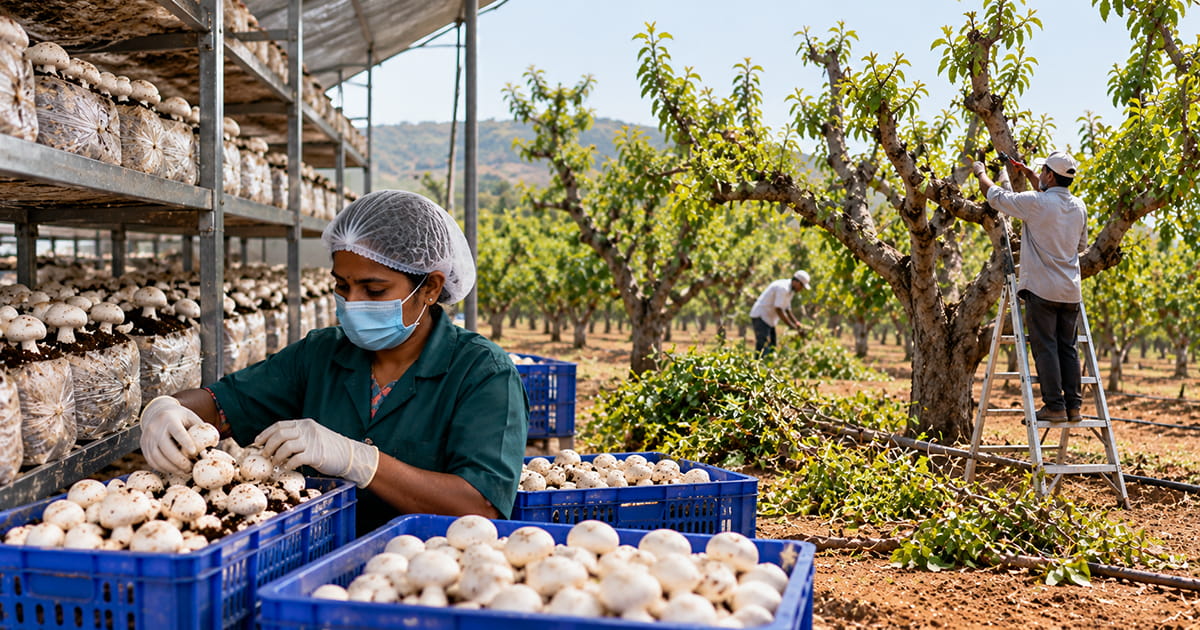
Mushroom units are supported at several scales: production units, spawn making units and compost making units in the private sector are credit-linked and back-ended, while a low-cost or small-scale unit is supported at a higher percentage with a per-beneficiary unit limit.
Under NHB, an integrated mushroom unit needs installed capacity above 50 MT. Below that scale, the NHM low-cost route is the one to look at.



