
Before you spend money: cost norms, rates and conditions can be changed by the Government. This page explains the April 2025 MIDH operational guidelines as written. Confirm the current position with your State Horticulture Department before committing to a project.
Beyond the structure and the crop, the guidelines support a set of add-on components. Each has its own cost norm and, more importantly, its own ceiling.
The add-ons
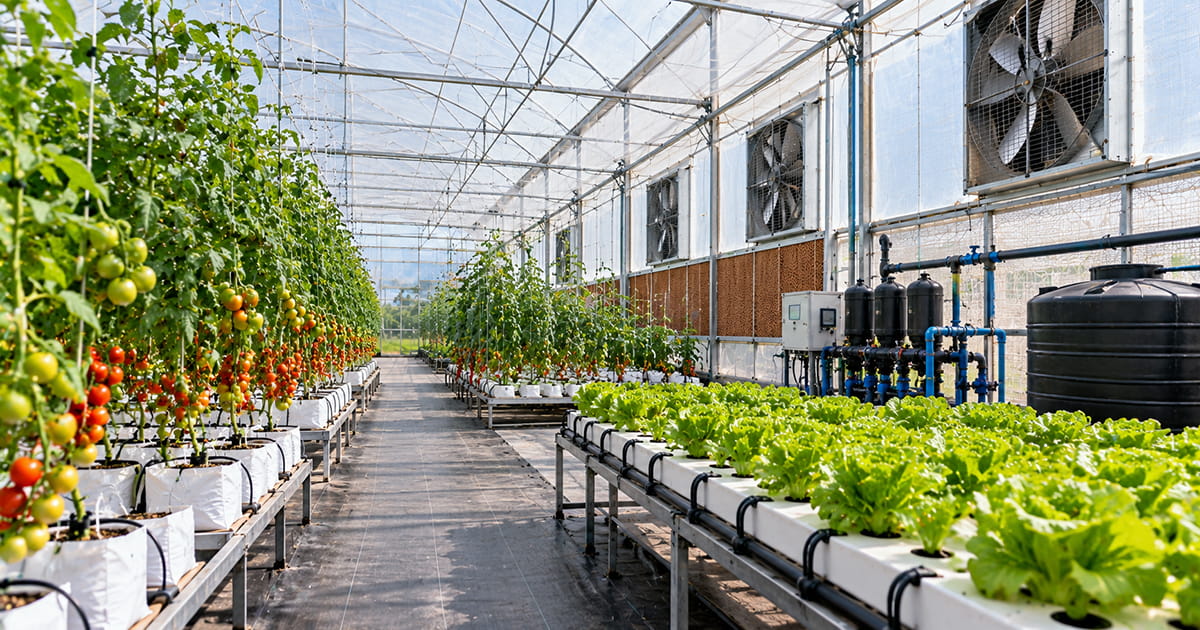
| Component | Cost norm | Assistance and limit |
|---|---|---|
| Hydroponics and aeroponics | ₹350 per m² | 50%, within the stated area limit |
| Circulation fans in a polyhouse | ₹5,000 per fan | 50%, maximum 6 fans |
| Plastic mulching | ₹40,000 per hectare | 50%, within the stated area limit |
| Fencing | ₹300 per running metre | 50%, maximum 1,000 running metres |
Two further add-ons belong in this group and are not in the table above, because their cost norms have not been transcribed from the guidelines yet: sensor-based fertigation automation, costed per unit and tied to the protected area it serves, and weed mat, costed per square metre. Both are assisted at 50% like the rest, and both are tied to the protected area rather than to your holding. Ask the department for the per-unit figure before you order, or ask us and we will read it out of the document.
The ceilings do the real work
Six fans is six fans, whatever the size of your structure. A thousand running metres of fencing is roughly the perimeter of a square block of six hectares, about fifteen acres. Installing more is allowed; claiming on more is not.
A word on hydroponics
Hydroponics carries a far smaller area ceiling than the polyhouse itself. It is supported as a technology to adopt, not as a way to fit out an entire structure at subsidised cost.
Before you order
Check that the add-on is claimed against the right component, and that your structure area is within the limit the add-on is tied to. Several of these are conditional on the protected area, not on your total holding.



