
Before you spend money: cost norms, rates and conditions can be changed by the Government. This page explains the April 2025 MIDH operational guidelines as written. Confirm the current position with your State Horticulture Department before committing to a project.
Vegetables and flowers sit under the same area-expansion heading as orchards, and follow the same rule: 40% in general areas, up to 2 hectares per beneficiary.
Vegetables
| Category | Cost norm | Assistance |
|---|---|---|
| Hybrid vegetables | ₹60,000 per hectare | 40%, up to 2 ha |
| Open-pollinated vegetables, including onion, garlic and leafy vegetables | ₹50,000 per hectare | 40%, up to 2 ha |
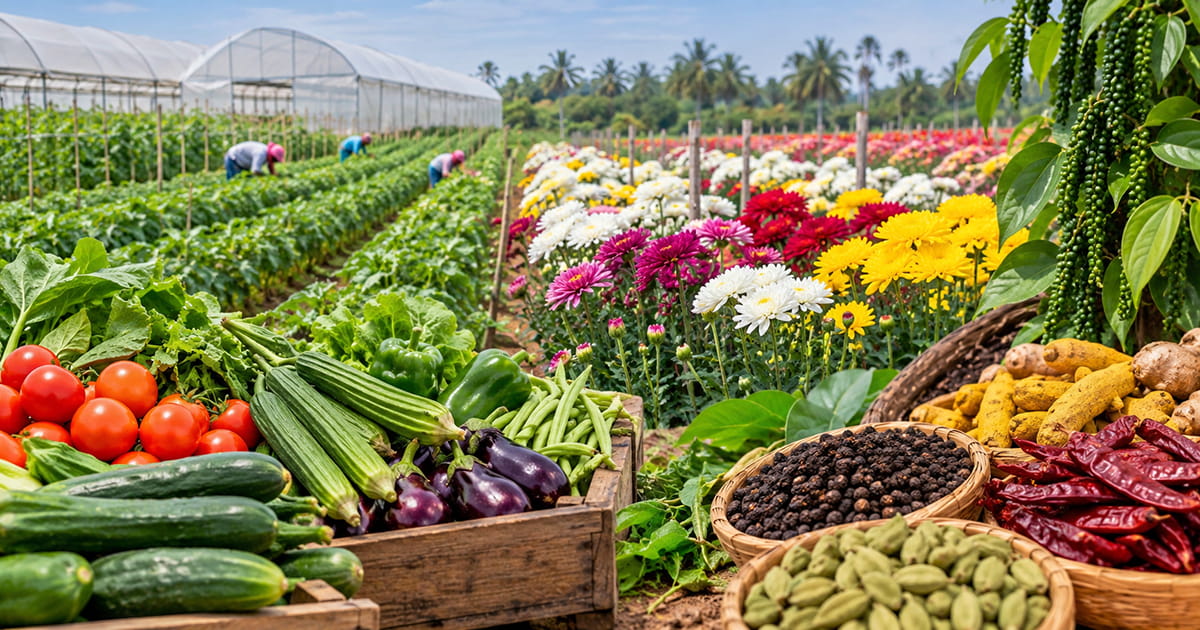
The hybrid category covers crops such as tomato, cauliflower, cabbage, brinjal, okra, capsicum, cucumber, melons and chilli.
Flowers
| Category | Cost norm | Assistance |
|---|---|---|
| Cut flowers | ₹1.25 lakh per hectare | 40%, up to 2 ha |
| Bulbous and rhizomatic flowers | ₹2.50 lakh per hectare | 40%, up to 2 ha |
| Loose flowers | ₹50,000 per hectare | 40%, up to 2 ha |
Bulbous and rhizomatic flowers include gladiolus, lily, gerbera and tuberose. Loose flowers include rose, chrysanthemum, jasmine and marigold. The same flower can appear in more than one category depending on how it is grown, which is worth confirming with the department before applying.
Spices, aromatic and medicinal plants
These follow the same 40% and 2-hectare pattern against their own norms: seed spices and other categories carry separate figures, as do cost-intensive and other aromatic plants, and listed medicinal plants.
Open field or protected
These norms are for open-field cultivation. Growing the same vegetables inside a polyhouse falls under the protected-cultivation crop component instead, at a per-square-metre norm. Do not apply both to the same area.



