
Before you spend money: cost norms, rates and conditions can be changed by the Government. This page explains the April 2025 MIDH operational guidelines as written. Confirm the current position with your State Horticulture Department before committing to a project.
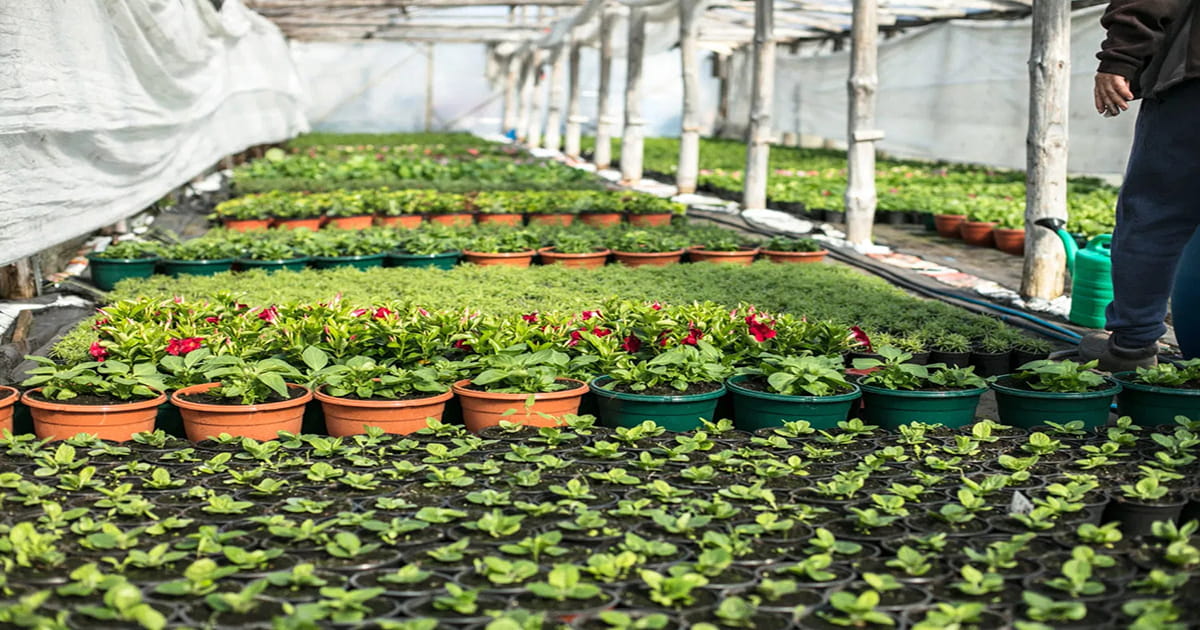
Everything downstream depends on planting material. A polyhouse built to specification still fails on poor plants, which is why the mission supports nurseries separately from the crops they supply.
The two nursery sizes
| Type | Area | Cost norm | Public sector | Private sector |
|---|---|---|---|---|
| Large nursery | 1 to 2 hectares | Up to ₹30 lakh per hectare | 100% | 40% |
| Small nursery | 0.4 to 1 hectare | ₹20 lakh per hectare | 100% | 50% |
Why the small nursery gets the higher percentage
It reads oddly until you look at the totals. Forty percent of ₹30 lakh is more per hectare than fifty percent of ₹20 lakh. The higher rate on the smaller unit narrows the gap for a smaller operator rather than reversing it.
The conditions that matter
Both categories carry a minimum production requirement per hectare per year, and an accreditation requirement within a set period after the last instalment is released. Neither is a formality. A nursery that never gets accredited has a problem with the assistance it has already received.
Tissue culture
A new tissue culture unit is supported on a project basis, with private-sector assistance being credit-linked and back-ended. That places it in the same category as cold storage rather than as a simple component application: a bank comes first, and the money settles at the end.



