
Skip to the content

NHM · Crops grown inside a protected structure

Growing crops inside a polyhouse: the cost norm you probably missed

Planting material and cultivation inside a protected structure is a separate component from the structure. High-value vegetables carry ₹150 per square metre, orchid and anthurium ₹700, carnation and gerbera ₹600, and rose, chrysanthemum and lilium ₹450, all at 50%.

  • Source verified by our team
  • 2 min read
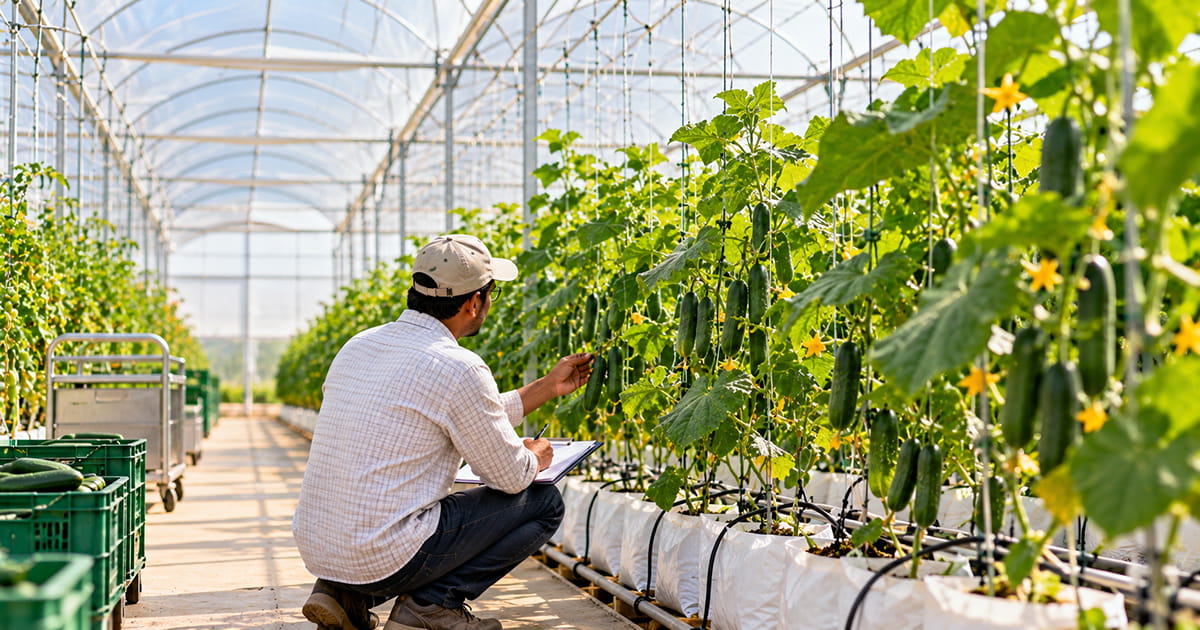
Illustrative image
Ask about this
Source verified by our team
Author Editorial team Reviewer Admin Verified 07 Sep 2026 Applies to NHM · Crops grown inside a protected structure Rule period 01 Apr 2025 – current
A reviewer matched the statements on this page to the official documents listed under Sources. It describes our verification work, not an official endorsement. Scheme decisions and approvals rest with the relevant authorities.

Before you spend money: cost norms, rates and conditions can be changed by the Government. This page explains the April 2025 MIDH operational guidelines as written. Confirm the current position with your State Horticulture Department before committing to a project.

People planning a polyhouse often budget for the structure alone and miss that the crop inside it is a separately supported component.

The four crop categories

What is grown Cost norm Assistance
High-value vegetables such as capsicum, cucumber, tomato, muskmelon, broccoli ₹150 per m² 50%
Orchid and anthurium ₹700 per m² 50%
Carnation and gerbera ₹600 per m² 50%
Rose, chrysanthemum and lilium ₹450 per m² 50%

Why the spread is so wide

The norm reflects what it costs to plant and establish the crop, not what the crop earns. Orchid and anthurium planting material is expensive; vegetable seedlings are not. A ₹700 norm is not a signal that orchids are the better business.

How this changes a project plan

Consider 4,000 square metres of naturally ventilated polyhouse growing capsicum. The structure and the crop are assessed separately, each at 50% of its own norm. Leaving the crop component out of the plan understates both the supported cost and what you need to arrange yourself.

What to check

Whether your specific crop appears in the category you are claiming under, and what the department in your district treats as the applicable list. The guidelines name examples rather than an exhaustive catalogue.


Sources

Mission for Integrated Development of Horticulture (MIDH) — Operational Guidelines, April 2025
Horticulture Division, Department of Agriculture & Farmers Welfare, Ministry of Agriculture & Farmers Welfare, Government of India · Guideline · 01 Apr 2025 · Current
Official original
Statements checked on this page (4)
  • Source verified by our team For planting material and cultivation of high-value vegetables inside a protected structure, the cost norm is ₹150 per square metre with assistance at 50%. This is separate from, and additional to, the cost of the structure itself. — Printed p. 45 (PDF page 55), Annexure V and related sections
  • Source verified by our team For orchid and anthurium grown inside a protected structure, the cost norm is ₹700 per square metre with assistance at 50%. — Printed p. 45 (PDF page 55), Annexure V and related sections
  • Source verified by our team For carnation and gerbera grown inside a protected structure, the cost norm is ₹600 per square metre with assistance at 50%. — Printed p. 45 (PDF page 55), Annexure V and related sections
  • Source verified by our team For rose, chrysanthemum and lilium grown inside a protected structure, the cost norm is ₹450 per square metre with assistance at 50%. — Printed p. 45 (PDF page 55), Annexure V and related sections
Version history (3)
DateChangeReasonStatus
14 Oct 2026 Updated — Source verified by our team
07 Sep 2026 Bulk approved by the owner (7 Sep 2026), not a line-by-line review — Source verified by our team
07 Sep 2026 Created — Awaiting verification
Report an issue

Spotted something outdated or wrong? Tell us what and, if possible, where the correct information is. No account or phone number needed.

Frequently Asked Questions

Yes. Planting material and cultivation inside a protected structure is a separate component from the structure, with its own cost norm. The structure and the crop are assessed separately, each at 50% of its own norm.

High-value vegetables such as capsicum, cucumber, tomato, muskmelon and broccoli carry ₹150 per square metre, with assistance at 50%.

The norm reflects what it costs to plant and establish the crop, not what the crop earns. Orchid and anthurium planting material is expensive at ₹700 per square metre; vegetable seedlings are not. A higher norm is not a signal that the crop is the better business.

The guidelines name examples rather than an exhaustive catalogue, so check whether your crop falls in the category you are claiming under and what the department in your district treats as the applicable list.

