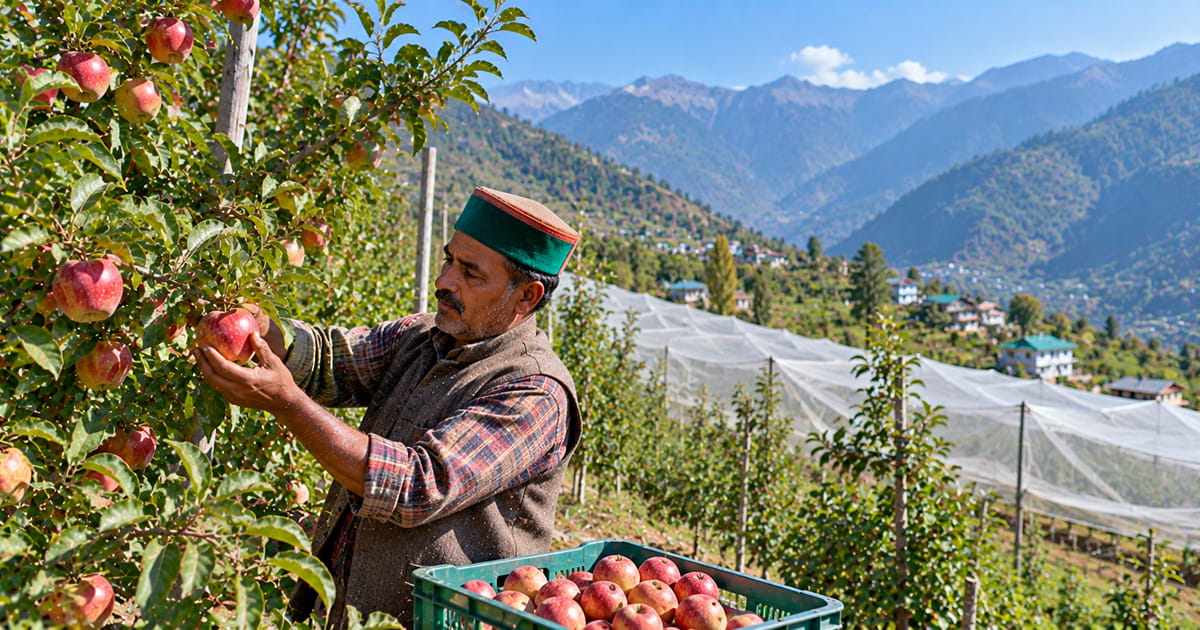
Research on Himachal Pradesh has started, and it found a department that publishes a great deal — almost none of it about what the Mission pays.
The Department of Horticulture's site is substantial and well kept. What it puts in front of a grower is orchard practice: the spray schedule for apple for 2026, dated February 2026 and produced jointly with Dr Y. S. Parmar University of Horticulture and Forestry, separate schedules for stone fruits and for mango and citrus, a training manual, and its own department and farmer apps. It also runs the Market Intervention Scheme, which is Himachal's own price-support mechanism for apple and other fruit, and publishes universal carton notifications — both of which matter to an apple grower's income and neither of which is the Mission.
That is a coherent picture of a state whose horticulture policy is built around one crop, and it is genuinely useful. It is not a statement of cost norms, rates or ceilings, and none was found.
Himachal Pradesh is a Himalayan state, so the Mission reaches a grower here as HMNEH rather than NHM, and under the national guidelines the Government of India contributes 90% of the outlay rather than 60%. That is the split between governments, not a rate of assistance, but it is why a hill state's own scheme papers can differ from a plains state's.
What does apply here meanwhile: the 64 statements we have taken from the MIDH operational guidelines of April 2025 hold across the country — the components the Mission supports, the national cost norms and the general rates of assistance. Those are the guides listed below, and every figure in them names the page it came from.
What is still missing: any Himachal document setting a rate, a ceiling or an application window under the Mission; and the terms of the Market Intervention Scheme, which is the state's own and worth a page of its own once read.